the mountain
Inspired by the many conversations had while hiking in the mountains with my friend Tommy. Enjoy!
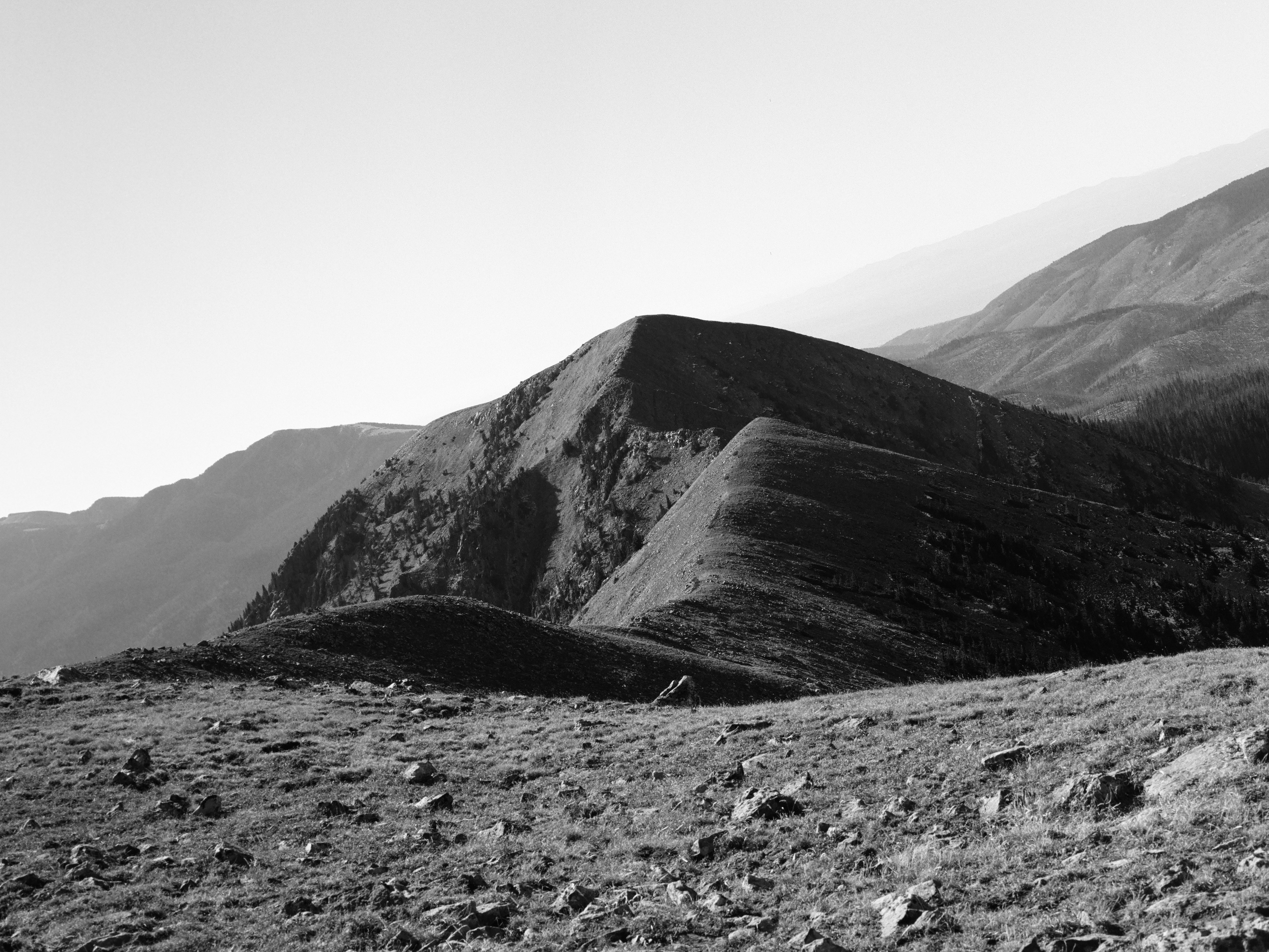
The Mythic Mountain
A meditation on the journey of life, archetypes and their images, and mountains en materia
Why strive for higher consciousness? Jung asked the question to explore the facets, benefits and potential risks found in the pursuit of higher consciousness. Getting above and beyond earthly entanglement can be done through conceptualization or a kind of ‘spiritualization’.
In alchemy the term sublimatio describes the “operation pertaining to air, it turns the material into air by volatizing it, elevating it,” wrote Jung. Of the risks involved with ascending the mountain is flying too high, transcendence without containment and/or integration. During the 60’s/70’s in America, individuals sought to expand their conscious experience through psychedelics. The movement itself appeared to promote the death of the ego, a necessary mediating faculty. Although the pursuit of expanded consciousness heralded greater compassion, love, and creativity, there were little to no supports for helping individuals to incorporate and understand their experiences. They had both feet in their own subjective reality and were as such untethered from consensus reality. However the varied pursuits of the psychonaut did not stop here. The same emphasis on the dissolution of a mediating self was also promoted by peers during my undergraduate years in the late aughts. This emphasis proved a dangerous road for those without substantial ego strength or support from experienced peers or professionals with integrating unique experiences, often resulting in social isolation or other mental/emotional disturbances. In alchemy during sublimatio, one can see the vapor being caught and gathered in a chamber above that which was being heated. The absence of containment (support) renders the process incomplete. Jung wrote that “The capacity to get above our issues can trigger a dissociation. Modern people frequently overuse sublimatio and drift into a thin, splendid isolation. Such a person may dream of rising in a wall-less elevator, far from earth. The imagery shows an autonomous ascent that outpaces the personality’s ability to ground the expanded perception. We need to help Psyche circulate between abstract archetypes and human contact. Soul needs the sky; soul needs the ground.”
Around the world, cultures have and still summit sacred mountains (realm of the gods) in search of wisdom for how to transform or move beyond the suffering they face in the valley below (realm of mortal beings). Mountains are from a time immemorial, and have thus imprinted their magnitude and mysterious character into the early psyches of proto-human. Mountains as such then exist within and without, can be summited by foot and through both interiority (within oneself) and ‘inwardness’ (within an image).
Mountains can be found as central and peripheral images within fiction, and as such can be difficult to map in their true breadth and symbology. However, two contemporary stories capture well, the mythic character of the mountain, and what the summit entails and can reflect both literally and metaphorically (two faces of the same coin). The Journey of Ibn Fattouma and Mount Analogue end without the protagonist(s) reaching the summit, let alone finding what lay hidden or revealed there). As a young adult, both stories validated and continue to validate aspects of my own journey to self-actualization, providing image, metaphor, and literalism to stages of life and the changes therein. In The Journey of Ibn Fattouma, the protagonist is in search of a utopian realm, and what is sought in Mount Analogue, is a bridge between earthly and heavenly realms. The stories emphasize the unreachable, the mysterious, the ineffable. The stories also describe the developmental heights hidden within oneself. For the protaganists within these tales, the climbing of the mountain, corresponds with, and/or actualizes the developmental journey, the raising of individual and by proxy collective consciousness. The archetype of the mythic mountain, attempts to make intelligible that which appears to be beyond the grasps of biological and psychological orders. The mythic mountain as archetype, is a dynamic spirit, both challenging and nurturing, of the world and beyond, and as a bridge exists between.
The mythic mountain offers trials/challenges, requisite for further ascension of potential and perspective. The resolution of each trial becomes the tool necessary for bringing to fruition the reality and sequencing of each following stage e.g. ‘The stream fills the bottle of water needed for the next climb’ and in development ‘mistakes make masters’. The mythic mountain is both the guide and that which needs orienteering. As a teacher the mountain holds many lessons, and in particular in the tales aforementioned, the mountain summit is not reached, a reminder to the pilgrim that the summit is not the point of the journey. The process of human discovery, through loss or gain, provides the capacity for recognizing more fully the scope and reality of the mythic mountain itself. From the side of the mountain the contrast reinforces the reality of the ascension, however, from within the mountain the climbers primary reference is the mountain within. In both stories the mystery and gnosis maintain a gravitational hold on the characters, it draws them further into their visions. Without visual certainty, they flirt with the objective reality of the mythic mountain itself.
The preparation for the journey cannot be overstated, as it holds within itself the potential for the mythic mountain to expand beyond its physical bounds. The gear, the training, and the trust all constellate the momentum embedded in the vision itself. Life prepares us for death, it ‘is our goal’. It is said we have everything we need for life, but should be prepared for life to take every little bit of it. We may all find resolve in knowing, that the mythic mountain is the storehouse of our lives, a place of exchange setting the perimeters of what will naturally be gained and lost. It is folly to assume that the summit will be reached in life. The pilgrim recognizes this, enabling them to see the essence of the summit within all stages of the life cycle. The mountain catalyzes change, and in image alone secures the climbers place amongst the earth and stars. The physical mountain however, also reflects back the realities enshrined within the psyche. It demonstrates to the pilgrim their innermost capacities and tolerances. Clouds of doubt no longer deter, they invite depth, bringing clarity that the heart of the pilgrim is the heart of the mountain.
One’s return from the mountain is paramount to the journey. What is the summit without its valley? The gifts bestowed through the alignment with the mountain must be shared. In Black Elk Speaks, Hehaka Sapa enters ceremony, and upon his return becomes ill, for he has not yet shared his gifts with his people. What the mountain bestows must be shared, be it through poetic use of language, photography, stories told around the fire, or skills passed on to the youth of today. This is the true integration, the completion of the sublimatio, the reconstitution of what was transformed through the passage to the stars. Naturally, the pilgrim becomes a guide, and returns to the mountain with others, helping them find the mountain within. Integration keeps our feet on the ground when our head is in the clouds. The Valley is the mirror we all must polish.
Mateo Klepper
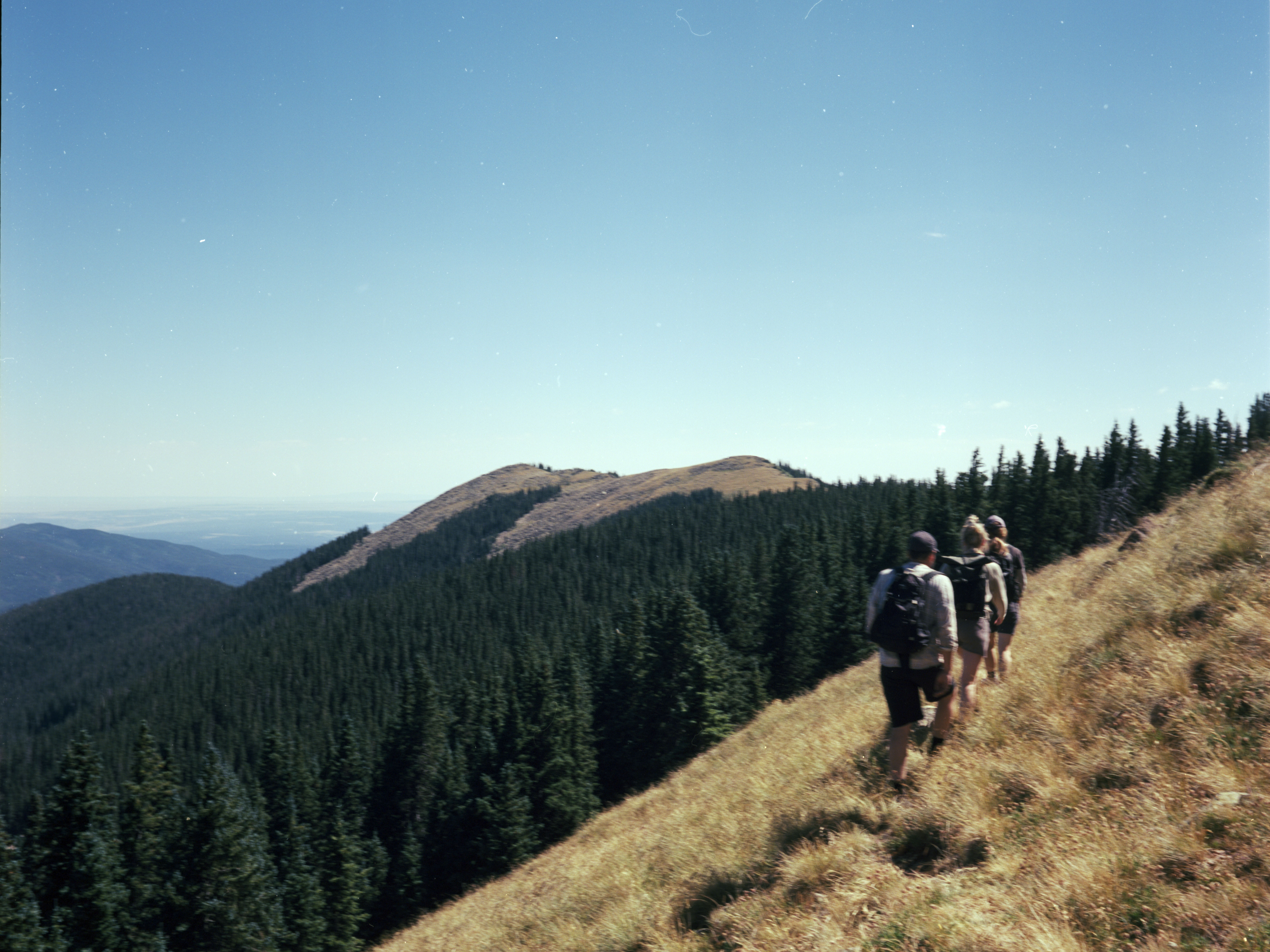
Origin of my Mountain Myth - a reflection by Tommy Geanakos
When I was a boy, as my parents weaved up and down Northern California mountain roads in our GMC Safari, I would lay on a bench seat and look out the window, above and behind my resting head. Outside, in this upside-down world, the light would flash through dense branches in a barely perceivable pattern, until a break in the pines revealed the mountains we were traversing. Nameless and often burned from a forest fire, these austere mountains seemed so uninhabitable as to remain eternally untouched by humans. Catching just a quick glimpse would induce the same reoccurring daydream wherein I found myself magically transported across the valley up to the peak. I’d imagine myself stuck indefinitely on this place up high, watching myself and the family van meandering below. In these daydreams there was a quiet melancholic terror, as years passed ceaselessly and time stretched out I remained stuck on this mountain, isolated and separate from the world. However, in this dream there was also the wistful sense that, perhaps like the mountain itself, sequestered from the concerns of the material world, I’d exist in peace.
Looking back, I can see my young mind directly experiencing the mountain as archetype and symbol. As a passenger in a state of transition, unbound by agency and obligations of everyday life, the mere image of the mountain was able to pull me from the material realm into the spirit realm, into a world of metaphor and myth. While my parents bickered about finances in the front seat, I was off in a reverie outside temporal bounds.
Now, over twenty years later, over a thousand miles away in New Mexico, I’m hiking up the mountain peaks, returning to the daydream world of my youth. The literal differences between the mountains I grew up around and those of the present don’t matter, as it’s the same symbol, the same mountain. However, now the mountain archetype is not just being mentally absorbed but becoming wholly embodied, as I move physically through, up and stand upon the mountain.
To climb for hours, pushing past supposed limits of strength, reaching a point where earth ends and sky begins, looking down and seeing the everyday world turned infinitesimally small, is a powerful spell. As physical limits break, and mundane concerns of material reality get further and further away, one slips into the mythic. Language becomes inadequate for the ancient knowing received in the body, and rendered dumb, in both the historical and modern sense, one submits to and becomes a piece of this infinite time.
TG
See more photos by Tommy Geanakos here.